
Payment on Delivery Method for Online Vendors in Nigeria (Pros, Cons & Best Practices)
If you’ve ever bought anything online in Nigeria, chances are you’ve come across the term “Payment on Delivery” (PoD) For many customers, it’s not just a payment option; it’s a non-negotiable condition for making a purchase.
But what exactly is Payment on Delivery, how does it work, and why is it so popular? More importantly, what are the upsides and downsides for both customers and online vendors, and how can everyone make the most of it?
What is Payment on Delivery (PoD)?
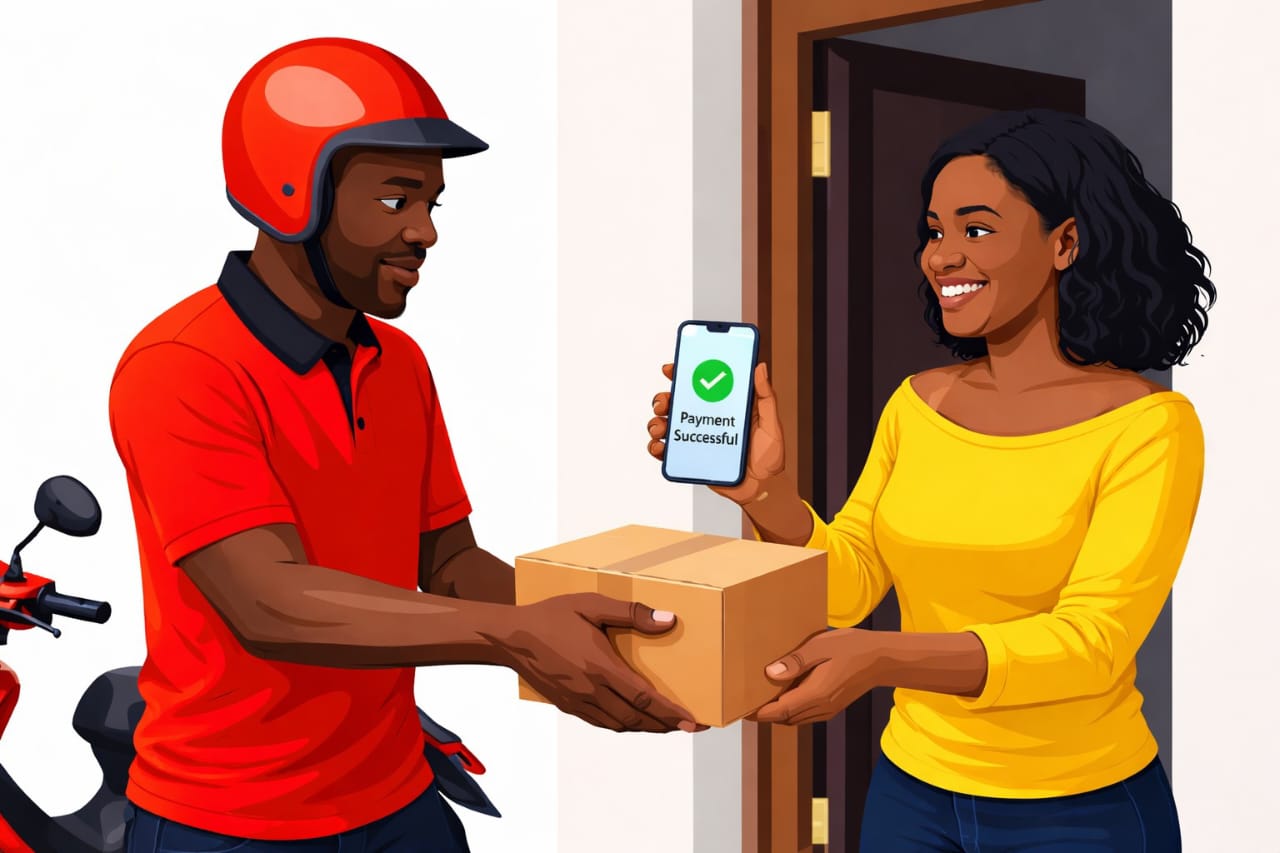
Payment on Delivery (PoD), also known as Cash on Delivery (CoD) or Pay on Delivery, is a payment method where customers pay for their purchased goods only when they physically receive the items from the delivery agent (dispatch rider).
Instead of paying online before the item is shipped, the transaction is completed at the customer’s doorstep. The money collected by the dispatch rider is then remitted back to the vendor.
Why is Payment on Delivery So Popular in Nigeria?
The popularity of PoD in Nigeria online sellers stems primarily from two major concerns:
- Fear of Scams: Unfortunately, online scams are a reality. Customers worry about paying for an item upfront only for the vendor to disappear or send something completely different. PoD significantly reduces this risk.
- “What I Ordered vs. What I Got” Syndrome: Many online shoppers have experienced receiving an item that looks nothing like what was advertised. With PoD, customers have the opportunity to quickly verify the product before handing over their money.
According to a report by Technology Times, over 50% of Nigerian online shoppers preferred PoD as of 2015. Even today, despite the proliferation of fintech solutions, PoD remains dominant.
Another research shows that payment on delivery (PoD) remains a popular payment method in Nigeria due to consumer distrust of online prepayments and concerns about counterfeit goods (Chiejina & Olamide, 2014; Abiamuwe et al., 2022).1
The Pros of Payment on Delivery
For Customers:
- Reduced Risk of Scams: The biggest advantage. You only pay when you have the product in hand, eliminating the fear of losing your money to a fraudulent seller.
- Quality Assurance: You can quickly inspect the item to ensure it matches the description and is in good condition before payment. This addresses the “what I ordered vs. what I got” problem.
In a 2024 study, 78% of surveyed Nigerian e-commerce customers preferred COD over online payment methods because it allows them to inspect goods before paying (Abiamuwe et al., 2022).2
- Convenience: No need to stress about online payment gateways at the time of purchase. You pay when it’s convenient – upon delivery.
- Increased Trust: Knowing a vendor offers PoD instantly builds trust and confidence in their business.
For Online Vendors:
- Wider Customer Base: You attract customers who are hesitant to pay online, significantly expanding your potential market.
- Increased Sales & Conversions: The reduced risk for customers often translates to higher conversion rates and more completed sales.
- Competitive Edge: Offering PoD can differentiate you from competitors who only accept upfront payments.
- Builds Trust: By offering PoD, you demonstrate confidence in your products and commitment to customer satisfaction, fostering long-term loyalty.
- Encourages impulse purchases: Customers are more likely to buy when the financial risk is low
The Cons of Payment on Delivery
For Customers:
- Risk of Impulse Buys: The ease of ordering without immediate payment might lead to more impulse purchases, which customers might later regret and refuse.
For Online Vendors:
- Higher Return/Refusal Rates: Customers might change their mind after ordering, refuse to accept the package, or reject it upon inspection, leading to wasted delivery fees for the vendor.
- Cash Flow Delays: Money from sales isn’t immediately available. The logistics company collects it and remits it later, impacting the vendor’s cash flow.
For Logistics Companies:
- Logistical Complexity: Managing PoD requires robust systems for cash collection, reconciliation, and timely remittance to vendors.
- Time Wasting: Riders spend more time on PoD orders compared to prepaid.
- Stress on Logistics Companies: PoD requires extra communication, confirmation and sometimes multiple follow-ups.
Best Practices for Payment on Delivery in Nigeria
For Customers:
- Be Ready to Pay: Have the exact amount ready either in cash or bank transfer.
- Inspect Quickly: Do a quick but thorough inspection of your item before paying to confirm it’s what you ordered.
- Confirm Order Details: Double-check the order details (product, price) with the rider before payment.
- Be Available: Ensure you are available at the delivery address when the rider is scheduled to arrive.
For Online Vendors in Nigeria:
1. Clear Product Descriptions & Photos: Minimize “what I ordered vs. what I got” issues with accurate product images and detailed descriptions.
3. Use a Reliable Logistics Partner: This is crucial! A trusted partner like Heinrich Logistics will handle cash collection securely and remit your funds promptly.
4. Always Confirm Orders Before Sending Out: Call or message customers to confirm their availability, their interest and location. This alone reduces failed deliveries by 40%
5. Set Clear Return Policies: Have a clear policy for items rejected or returned at the point of delivery.
How Heinrich Logistics Simplifies PoD for You
At Heinrich Logistics, we facilitate countless PoD transactions every day, acting as the trusted link between Nigerian’s vibrant online market and its eager customers.
We understand that Payment on Delivery is essential for the thriving e-commerce in Nigeria. That’s why we’ve built a seamless and secure PoD system designed to benefit both customers and vendors:
- Secure Cash Handling: Our vetted dispatch riders are trained in secure cash collection procedures.
- Prompt Remittance: We ensure your collected funds are remitted to your bank account in a timely manner.
- Professional Riders: Well-trained, uniformed, and accountable.
- Excellent Customer Communication: Our riders call customers politely and professionally.
- Free warehousing for your goods: Many waybills take 2 to 3 days to reach Warri, instead of losing customers to delays, we store your goods and deliver same day once an order comes in.
With Heinrich Logistics, you can offer Payment on Delivery with confidence, knowing that your transactions are handled professionally and securely. This allows you to focus on growing your business while we handle the intricate logistics of payment collection and delivery.
Discover why Heinrich Logistics is trusted by many e-commerce vendors in Nigeria and learn what to look for in a reliable delivery service.
References
- Chiejina, C., & Olamide, S. (2014). Investigating the Significance of the ‘Pay on Delivery’ Option in the Emerging Prosperity of the Nigerian E-commerce Sector. Semantics Scholar. Available at: https://www.semanticscholar.org/paper/Investigating-the-Significance-of-the-%27Pay-on-in-of-Chiejina-Olamide/f9d069f2b63ccb6cd46afba455bdb30c8a40603f .
↩︎ - Abiamuwe, N. O., David, O. R., Seriki‑Mosadolorun, J. S., Olusegun, R. A., & Nwahunanya, I. (2022). E-Marketing of Clothing Products and Consumers’ Satisfaction of Delivery Methods in Lagos State, Nigeria. International Journal of Home Economics, Hospitality and Allied Research. Available at: https://ijhhr.org/index.php/home/article/view/162 . ↩︎